
Editorial update: 2 October 2026. The original article date is retained; the regulatory and service information below has been updated for this translation.
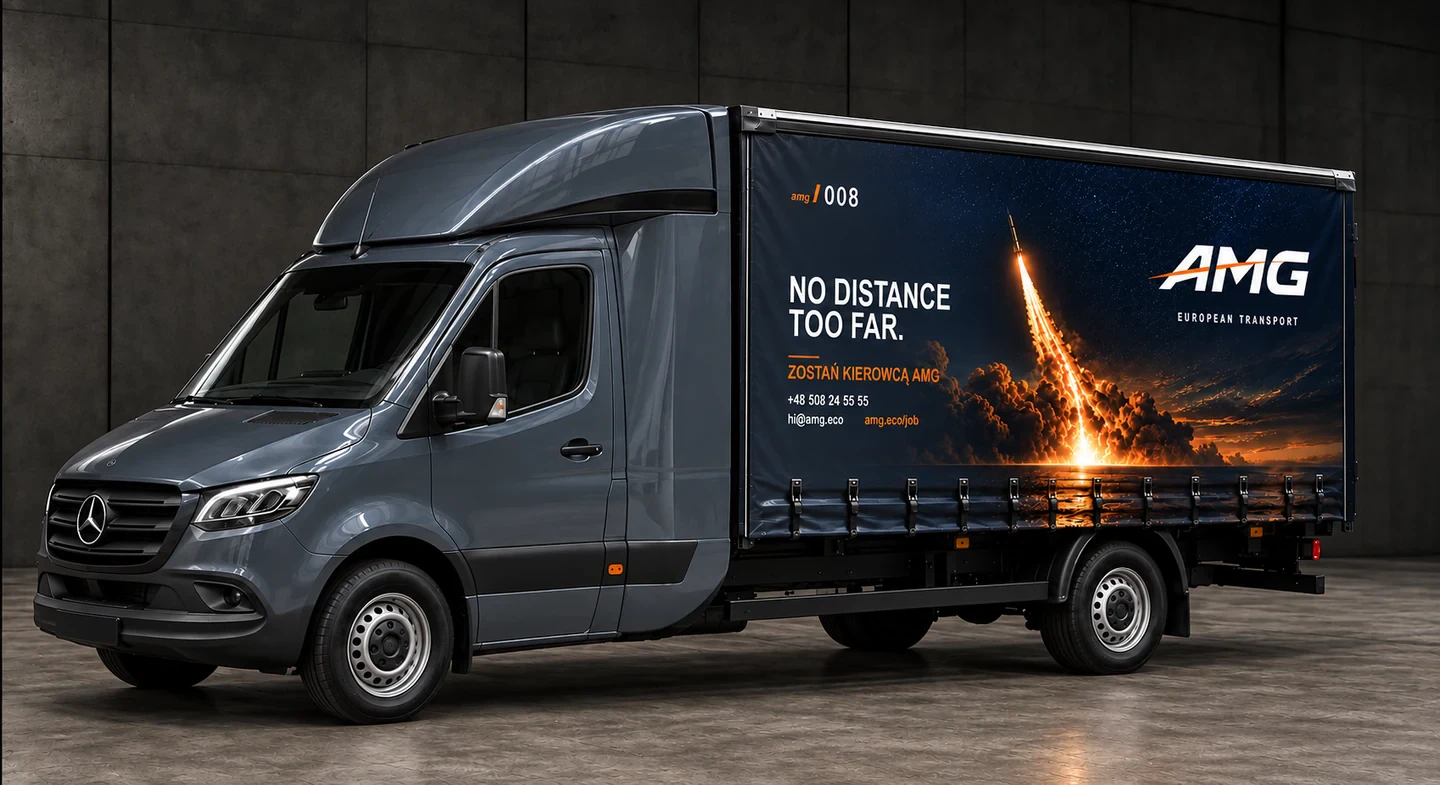
A 3.5-tonne limit describes the vehicle’s maximum authorised total mass, not its cargo capacity. Payload varies with the body, equipment and actual vehicle mass; a generic figure such as 1–1.5 tonnes is not a promise for every van. AMG’s current vehicle offer states 700 kg and up to 8 Euro pallets, subject to the load dimensions and vehicle selection. Confirm both mass and usable space before accepting the order.
How to calculate the actual payload of a 3.5-tonne van: maximum authorised mass versus unladen weight
Maximum authorised mass includes the vehicle, goods, occupants, fuel and equipment. To calculate the remaining payload, subtract the actual ready-to-drive vehicle mass from the permitted total and also respect axle limits. A document’s unladen or running-order mass uses a defined measurement basis: check what fuel, equipment and driver allowance it already includes, so the same mass is not counted twice. Weighing the vehicle in its actual configuration is the most reliable starting point.
Example: 3,500 kg permitted total minus 2,300 kg measured vehicle mass leaves 1,200 kg only if the measurement includes everything present on the journey except the load. If 200 kg of occupants, equipment or additional fuel are still missing from that measurement, only 1,000 kg remains. Loading 1,200 kg in the latter case produces a 200 kg overload. Do not add fuel again if it was already included.
Consequences of overloading in international transport: law and operations
Overloading a van up to 3.5 tonnes has serious legal and operational consequences. Under the applicable rules, exceeding the maximum authorised mass is an offence. In Poland, the driver may receive a fine. Abroad, penalties are often even higher: substantial fines and immediate immobilisation until the excess load has been removed.
Beyond financial penalties, overloading also has business consequences. The authorities may prohibit further travel until the excess cargo has been removed, delaying delivery. The transport company faces additional costs and possible customer claims for failing to meet the delivery deadline.
Inspections: how overloading is detected and what the authorities record
An inspection may establish total and axle weights by weighing the vehicle. Record the result and the measurement conditions, and check the report. Depending on national law, the authorities may impose a penalty or prevent further travel until the overload is removed. Liability is not automatically limited to the driver; the carrier or other responsible parties may also be involved. Arrange a lawful transfer or unloading if required.
Insurance and liability: how overloading complicates a claim
Overloading can complicate an insurance claim, but it does not automatically cancel every policy. Coverage depends on the type of insurance, the policy wording, the applicable law and the circumstances and cause of the loss. An insurer’s exclusion or allegation of gross negligence must be assessed against those conditions. Check the actual carrier-liability and vehicle policies rather than assuming either full protection or automatic refusal.
How to reduce the risk of overloading: checklists and communication
It is also worth preparing the goods properly for transport. See the guide “How to prepare a load for transport”.
The best approach is to prevent overloading through appropriate action before setting off. Key rules include:
- Monitor maximum authorised mass and cargo weight. Calculate the maximum load, taking fuel and the driver into account, and avoid loading right up to the limit. If in doubt, weigh the vehicle before departure.
- Use scales and expert advice. Where possible, weigh the vehicle before departure. Work with an experienced international freight forwarder who can advise on choosing a suitable vehicle.
- Tell the customer about the limits. Require the exact shipment weight and refuse loading beyond the permitted limit.
5 warning signs of overloading: 1) no reliable information about cargo weight; 2) the goods fill the van’s entire load space; 3) the suspension noticeably sags after loading; 4) handling difficulties, including a longer braking distance or instability; 5) pressure from the customer to load too much.
Contact us: we will advise you on transporting your cargo safely.
Contact us
Find out how we can help. Complete a short form.
FAQ
Frequently asked questions
How do you calculate the actual payload of a 3.5-tonne van?
Maximum authorised mass includes the vehicle, goods, occupants, fuel and equipment. To calculate the remaining payload, subtract the actual ready-to-drive vehicle mass from the permitted total and also respect axle limits. A document’s unladen or running-order mass uses a defined measurement basis: check what fuel, equipment and driver allowance it already includes, so the same mass is not counted twice. Weighing the vehicle in its actual configuration is the most reliable starting point.
Do fuel and the driver count towards the weight?
Maximum authorised mass includes the vehicle, goods, occupants, fuel and equipment. To calculate the remaining payload, subtract the actual ready-to-drive vehicle mass from the permitted total and also respect axle limits. A document’s unladen or running-order mass uses a defined measurement basis: check what fuel, equipment and driver allowance it already includes, so the same mass is not counted twice. Weighing the vehicle in its actual configuration is the most reliable starting point.
What are the consequences of overloading abroad?
An inspection may establish total and axle weights by weighing the vehicle. Record the result and the measurement conditions, and check the report. Depending on national law, the authorities may impose a penalty or prevent further travel until the overload is removed. Liability is not automatically limited to the driver; the carrier or other responsible parties may also be involved. Arrange a lawful transfer or unloading if required.
How can you reduce the risk before departure?
Weigh the cargo, or the vehicle after loading, before the journey. Make sure that the total, including fuel and the driver, is within the maximum authorised mass. If it is too heavy, remove part of the goods or send an additional vehicle. Clear communication with the customer about weight limits is also important.
Sources checked for this update: PL · Art. 827